#6months of Tunisia
NEWSLETTER. Growing protests over new sentences handed down to opposition figures; caution regarding the conflict in the Middle East.

- The severe crackdown on opponents continues, with appeal verdicts being handed down in high-profile cases relating to 'conspiracy against state security' (with sentences of up to 45 years). Despite the climate of persecution, demonstrations over economic and political issues have multiplied, as have heated protests over environmental pollution in the southern city of Gabès.
- Meanwhile, abroad, the country is strengthening its ties with traditional partners: Algeria, Italy and Russia. The EU maintains an ambivalent stance, condemning the repression and lack of freedoms while declaring the country 'safe' for migration control purposes.
- The serious conflict in the Middle East could have a significant impact on Tunisia's fragile economy, leading to a sharp increase in inflation and exacerbating the situation for households. Further mass protests could be triggered if the various opposition groups manage to unite their positions.
What happened.
On the international stage, Tunisia has continued to gradually distance itself from the West while deepening its relations with its regular partners.
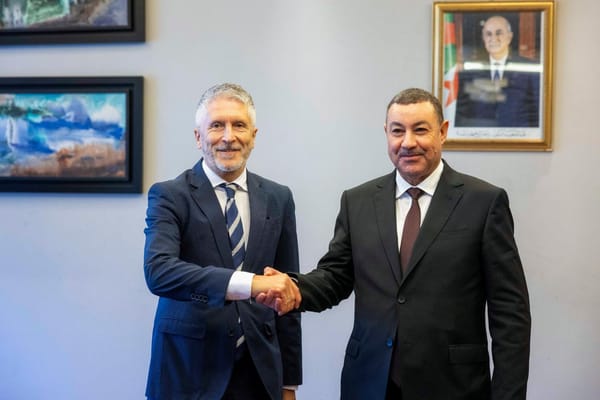
Firstly, relations with Algeria are growing ever closer thanks to the strong personal relationship between the two presidents. This has led to the signing of agreements on military and economic cooperation, including discussions on a forthcoming free trade agreement. Unsurprisingly, these strong ties have led to accusations of excessive political dependence on Algiers, with which Tunisia generally aligns itself in foreign policy, particularly regarding the Palestinian question. At the start of the semester, the country demonstrated its firm stance towards Israel, as evidenced by its angry reaction to the attacks on the 'Sumud Flotilla' while it was docked temporarily in the capital (having initially denied the attacks). Similarly, at the Doha Summit following the Israeli attacks in September, Tunisia called for Islamic solidarity and demanded intervention from the UN Security Council. In October, despite previous stalling by the presidency, some MPs urged acceleration of the bill that would criminalise any attempt to normalise relations with 'the Zionist entity'.
However, the current conflict in the Persian Gulf has led Tunisia to tone down its public support for the Ayatollahs' regime, with which it previously enjoyed excellent relations. During the attacks on the nuclear programme in June, Tunisia condemned the 'Zionist aggression', and in November the Iranian Foreign Minister visited Tunisia at the invitation of Minister Nafti. In contrast, the recent statement is careful not to defend Iran, instead supporting the Arab countries and calling for de-escalation. This can be seen as an attempt to avoid being perceived as problematic by the US.
Like the other Maghreb countries, Tunisia also maintains close relations with Russia, which have remained unchanged despite the invasion of Ukraine and international sanctions. Indeed, in December, Minister Nafti called for the consolidation of 'a lasting and comprehensive Russia–Africa partnership' during the annual continental meeting with Moscow.
Relations with the EU remain mixed. Italy remains a key partner, particularly given Prime Minister Meloni’s interest in strengthening ties with her country's close neighbour, as highlighted by Nafti during the Italy-Africa summit. This interest is evident in projects such as 'Elmed', the undersea electricity interconnection programme scheduled for completion in 2028. Through this initiative, Rome aims to export its surplus green electricity while integrating Tunisia into the Euro-Mediterranean energy market, all within the context of its 'Mattei Plan'. In contrast, relations with the EU are complex. In November, President Saïed reprimanded the EU ambassador for ‘failing to respect the rules of diplomatic conduct’ for meeting with the UGTT. He later denounced the ‘flagrant interference’ of the European Parliament when it called for the immediate release of all those detained for exercising their freedom of expression. Paradoxically, however, the Council of the EU has declared Tunisia a 'safe country' for migration purposes, meaning it is considered a guarantor of sufficient protection of fundamental rights. This allows the EU to outsource the management of asylum claims to Tunisia under the new Global Compact for Migration.
Domestically, the political landscape continues to be characterised by the severe persecution of political opponents, although there are signs of growing social mobilisation compared to the previous six months.
The repressive climate brought about by Decree 54 resulted in a man being sentenced to death for criticising the president on Facebook, although Saïed pardoned him shortly afterwards. During this period, appeal verdicts were handed down in several high-profile cases, including the 'conspiracy against state security' case, in which some of the thirty-seven defendants (some of whom had previously staged hunger strikes) received sentences of up to forty-five years' imprisonment. Another case was 'Conspiracy 2', in which the Islamist Ghannouchi saw his sentence increased to twenty years (bringing his total to forty across his various cases). Other severe sentences included twelve years for the leader of the Free Destourian Party, Abir Moussi (to be served in addition to previous sentences), and twenty-four years for Minister Larayedh for his role in sending jihadists to Syria. The relentless persecution of critics even affects former supporters of the president, such as MP Ahmed Saïdani, who was sentenced to eight months in prison for making offensive comments about the president in the context of the floods that hit the country in February. Fortunately, others, such as lawyers Ahmed Souab and Sonia Dahmani, have regained their freedom after being released from prison by the regime.
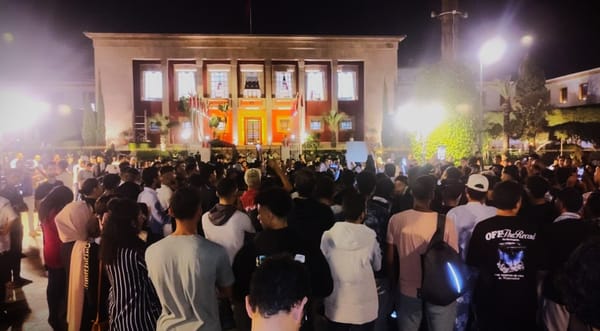
Despite the severe setback in the courts, the truth is that the sentences have not succeeded in completely quelling the opposition. On the contrary, there are signs of an increase in various forms of social protest. In addition to protests organised by relatives on the days the sentences were handed down, and successive strikes by various sectors — including journalists, doctors and transport workers — since late November, there have been demonstrations involving several thousand people. These people have been gathering every Saturday to protest against government repression, using various slogans such as 'Opposition is not a crime' and 'Break the chains'. The UGTT trade union announced a general strike for 21 January, but the resignation of its general secretary — who later withdrew it — and internal divisions led to the strike being cancelled.
In addition to demonstrations calling for political rights, major protests took place in the southern city of Gabès. Hundreds of cases of poisoning caused by inhaling toxic fumes emitted by the local phosphate industry sparked outrage, mobilising several thousand people over several weeks. Despite the government's promises of reform — they even called in Chinese experts responsible for the factory — emissions continue, and over a hundred demonstrators have been arrested. The protesters are not only concerned about public health issues, but also about the fact that the chemical plants have ruined the region’s agricultural and fishing industries.
On the economic front, the government can point to some fairly positive figures at the end of the year, despite the country's current fragile balance. These include remittances (around €2.4 billion, up 7%), tourism (€2.3 billion, up 7%) and a moderate recovery in foreign investment (US$945 million). According to official figures from the National Statistics Institute (INS), the country achieved growth of 2.5%, driven by the momentum of the agricultural and olive-growing sectors and representing an increase on the 1.4% recorded in 2024. However, inflation remains relatively high, falling from 7% to 6.2%, and public debt remains at around 80%, affected by heavy domestic borrowing.
What 's next.
The outlook for the next six months will depend largely on current events in the Persian Gulf. Following its cautious statement in the early stages of the conflict, Tunisia may shift its recent stance so as not to become the ‘black sheep’ of the Maghreb, as Algeria has done. In light of Russia and China's apparent lack of reaction to the attacks on Iran, there is likely to be a shift in policy towards the West, with a slight rapprochement with the US — particularly if the conflict is resolved quickly in Washington's favour. Whether or not it is included in Trump’s agenda will, of course, depend on whether Tunisia’s proposals align with the tycoon's championed deal-making diplomacy.
Economically, Tunisia could suffer considerably if the conflict drags on, as it is not a rentier state like Algeria and relies heavily on imported hydrocarbons. A significant rise in international energy prices could hinder Tunisia’s fragile economic recovery and reignite inflation, which has plagued the country for years, thereby worsening the situation for households.
This could lead to an increase in social instability, with popular demands adding to existing grievances relating to politics, civil liberties and the environment, and leading to further protests like those seen in recent months. Two factors could influence the potential outbreak of massive social unrest: first, the UGTT’s ability to overcome its internal crises and finally call a general strike uniting the discontented sectors; and second, new social groups emerging. Although political parties currently lack sufficient momentum and the government is exerting heavy pressure on associations — more than 40 have been suspended — new initiatives continue to emerge. One example is the Coordinating Committee for the families of victims of reprisals, which seeks to maintain pressure on the streets.
Meanwhile, President Saïed continues to publicly express his obsession with the 'international conspiracy' and brand those facing political charges as 'traitors'. Nevertheless, it seems unlikely that he will face any external pressure at a time when the EU is preoccupied with other issues and internal debates, and is primarily focused on containing migration from the Maghreb region.
- Personalistic leadership. The country continues to be governed by an authoritarian and highly personalistic regime led by Kais Saïed. Any foreign initiative in the country may be affected by the leader’s temperament, potentially facing accusations of external 'interference' if it does not align with the government’s priorities.
- Social protest. Although it is too early to predict a substantial expansion of the protests, discontented groups could unite to form an opposition with the capacity to destabilise the regime, potentially resulting in widespread protests and unrest.
- Bilateral crises. The EU’s current ambivalent relationship with the Tunisian government, which is focused on curbing immigration to the continent, means that less effort is being made to boost trade and encourage investment in Tunisia. Economically, this may result in a tendency to favour its usual partners over any European initiatives (with the exception of Italy).