#6months of Morocco
NEWSLETTER. A half-yearly review of Morocco: what has happened, what might happen, and what risks and opportunities lie ahead for Spain.

- Negotiations on the future of Western Sahara, prompted by the US and stemming from UN Security Council Resolution 2797, have begun. Three meetings involving the four parties concerned have taken place, but little information has emerged regarding their content or the demands of each party.
- Morocco continues to strengthen its international ties with the US (political and security) and with the EU (trade), but remains committed to diversifying its alliances and is drawing closer to Russia.
- Although intergovernmental relations with Spain appear to be ‘at their best’, the serious migration crisis in Ceuta has had a strongly negative impact on the Spanish public and media, which may have serious economic repercussions.
What happened.
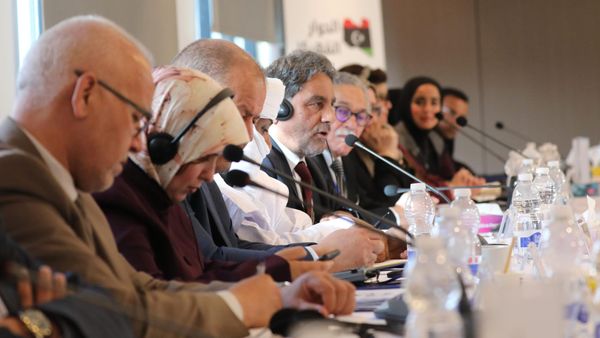
On the international stage, a key development was the start of negotiations on the future of Western Sahara, following United Nations Security Council Resolution 2797. Spurred on by the US and held in Madrid and Washington, these talks discreetly brought together representatives of the four parties involved – Morocco, the Polisario Front, Mauritania and Algeria – in the presence of Personal Envoy De Mistura, although little has emerged about what was discussed. Some sources leaked the contents of an alleged 40-page document said to be an expanded proposal for autonomy put forward by Morocco, although there is no confirmation from any of the parties that this proposal was used as the basis for the negotiations, as envisaged by the UN resolution. In any case, the process did not appear to be affected by the death in June, in an attack attributed to Morocco, of the son of a long-standing Polisario leader.
Meanwhile, Morocco continued to strengthen its relations with the US. In addition to the regular African Lion military exercises (which this year focused on the use of autonomous and semi-autonomous devices) and the signing of a new roadmap for military cooperation over the next ten years, King Mohammed VI demonstrated his particular affinity with President Trump by joining his ‘Council for Peace’, a body outside the UN promoted by the tycoon and his son-in-law to implement their plans for the Gaza Strip.
Morocco is also seeking to strengthen its relations with the EU. At the start of the semester, the Council authorised the European Commission to negotiate a new fisheries agreement, following the expiry of the previous one in July 2023 (although this was subsequently annulled by the CJEU in November 2024 due to its extension to the waters of Western Sahara without the due consent of the ‘Sahrawi people’). In April, Foreign Minister Bourita, meeting with High Representative Kallas, called for the maintenance of a “political, geopolitical and strategic” relationship with the EU, based on the kingdom’s “credibility”, as well as its “ability to fulfil its commitments” and “inspire confidence”. Despite the Ceuta crisis, the fact remains that neither Brussels nor other European capitals have called the relationship with Morocco into question, praising – as the Spanish government does – the excellent cooperation. Nor did the reaffirmation of the “deepened strategic partnership” between Moscow and Rabat – in place since 2016 – at the meeting held in March between the foreign ministers of both countries provoke any reaction from the EU.
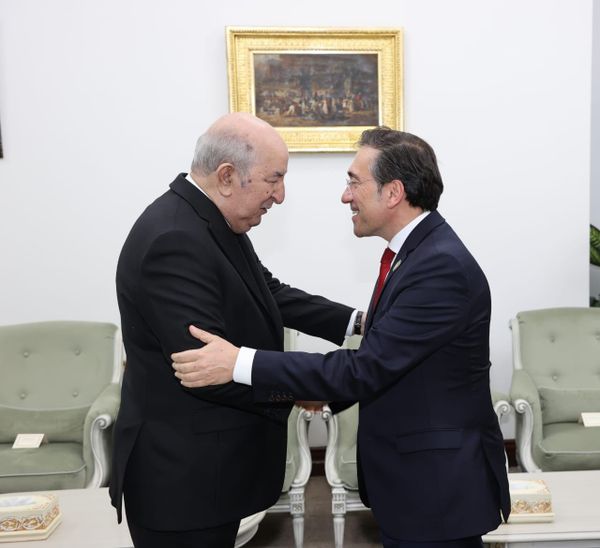
Relations with Spain have been the hardest hit following the serious migration crisis in Ceuta on 29 and 30 July. However, the year began with relations at a high point, following the High-Level Meeting held in Madrid in early December, which was attended by a large number of Moroccan ministers and saw the signing of various agreements. Not surprisingly, the first half of 2026 passed peacefully, marked by the signing of agreements relating to the 2030 World Cup and mutual praise and statements about the ‘excellent state’ of ‘unprecedented’ bilateral relations – none of which foreshadowed the serious events in the autonomous city at the end of July.
On the economic front, positive news was interspersed with a few setbacks. At a macro level, the country achieved considerable growth of 4.9 per cent in 2025 (up from 4.4 per cent in 2024) and kept the inflation rate at 0.8 per cent. Furthermore, key milestones included a strong commitment to invest in desalination plants by 2030, Marsa Maroc’s intention to acquire a 45 per cent stake in the Spanish port operator Boluda Maritime Terminals (the stevedoring subsidiary of the Valencian group), and the twenty million tourists welcomed by the end of the year. However, the country ended the financial year with an unemployment rate of 13 per cent (a slight decrease compared with 2024), and internal reports suggest there are nearly three million ‘NEETs’ in the system. In the energy sector, there was a surprise suspension of plans to build an LNG regasification terminal – which, not surprisingly, was planned for the new port of Nador West Med – a move justified by the relevant minister on the grounds of “the emergence of new parameters”.
What's next.
The parliamentary elections on the 23rd will largely shape the political risk landscape for the coming six months and, consequently, for the coming years, as the new government’s term will – barring any unforeseen circumstances – extend to the very clear deadline of 2030. Over the coming days, we will analyse here what we can expect from these elections, how each of the main parties is positioning itself, and what is at stake both for Moroccan citizens and for Morocco’s international standing.
At the end of October, we will see a new Security Council resolution on the Western Sahara issue. Resolution 2797, passed last October, finally granted the parties a one-year deadline to reach agreement on a solution based on the Moroccan proposal for autonomy, before deciding on a possible further extension of MINURSO’s mandate. Although the negotiation process appears to have got off to a successful start – or at least with all the parties involved present – a certain degree of deadlock has become apparent in recent months. Admittedly, the meetings have been conducted with the utmost secrecy – hardly anything has emerged beyond their mere location – but in any case it appears that the Trump administration, the driving force behind this new initiative, has recently downgraded the priority of this issue in the face of persistent, more pressing problems (the Strait of Hormuz, the Red Sea and Venezuela, for example).
Of course, the bilateral relationship between Spain and Morocco will continue to take centre stage – at least in the Spanish media – over the coming semester. Although the Spanish government has at no point blamed Rabat for the migration crisis and, on the contrary, has commended the Moroccan government for its cooperation in accepting those returning voluntarily, this serious incident has had an extraordinarily negative impact on Morocco’s reputation. The media coverage of the crisis in Spain to date, which has largely employed a bellicose narrative and portrayed Morocco as responsible, or at the very least negligent, in its management of the border, has caused a profound deterioration in the country’s image amongst Spaniards, and may have serious repercussions for bilateral trade and investment and, more generally, for the activities of Spanish companies in the neighbouring country, as we analysed in our recent ‘Brief’.
 Maghrebia
Read our analysis from 1 September
- International negotiations. The Western Sahara issue is of paramount importance to Morocco, and keeping negotiations on track based on its proposal for autonomy is its top priority. Despite other international concerns, Rabat will seek to regain US attention and achieve some concrete progress before the Security Council meets again at the end of October.
- Electoral landscape. The forthcoming elections on 23 September may lead to a change in the current governing coalition, creating a new legislative landscape that could alter the country’s priorities in the crucial run-up to 2030.
- Bilateral relations. The Spanish Government’s handling of the migration crisis and its ability to prevent the situation from spiralling out of control (in the face of a possible outbreak of violence or political pressure from its partners) will set the tone for relations between Madrid and the new government in Rabat, against the backdrop of 2027, which will also be an election year in Spain.
- Reputational risk. The media coverage in Spain of the Ceuta crisis and the bellicose and contentious language used when referring to Morocco could have a particularly negative impact on companies with interests in the neighbouring country, in terms of a possible boycott or a decline in operations, trade and investment opportunities related to the 2030 World Cup.