#6months of Libya
NEWSLETTER. Positive progress in the reconciliation process, economic growth, and promising agreements between parallel administrations.
- Significant progress has been made on the UN-led political roadmap. Agreements have been reached between the parallel administrations on institutional reform, and meetings of the Structured Dialogue have taken place. However, other initiatives spearheaded by internal and external actors could hinder the process.
- The US is seeking to reassume a leading role in resolving the conflict by promoting political and military reunification through an agreement between the ruling families. Meanwhile, Russia and Turkey are maintaining their presence and strategy of dialogue with both administrations.
- The conflict in the Persian Gulf has not yet had a significant impact on the country, which benefits from its status as an exporter of hydrocarbons. However, a prolonged crisis could lead to fuel shortages and widespread inflation.
What happened.
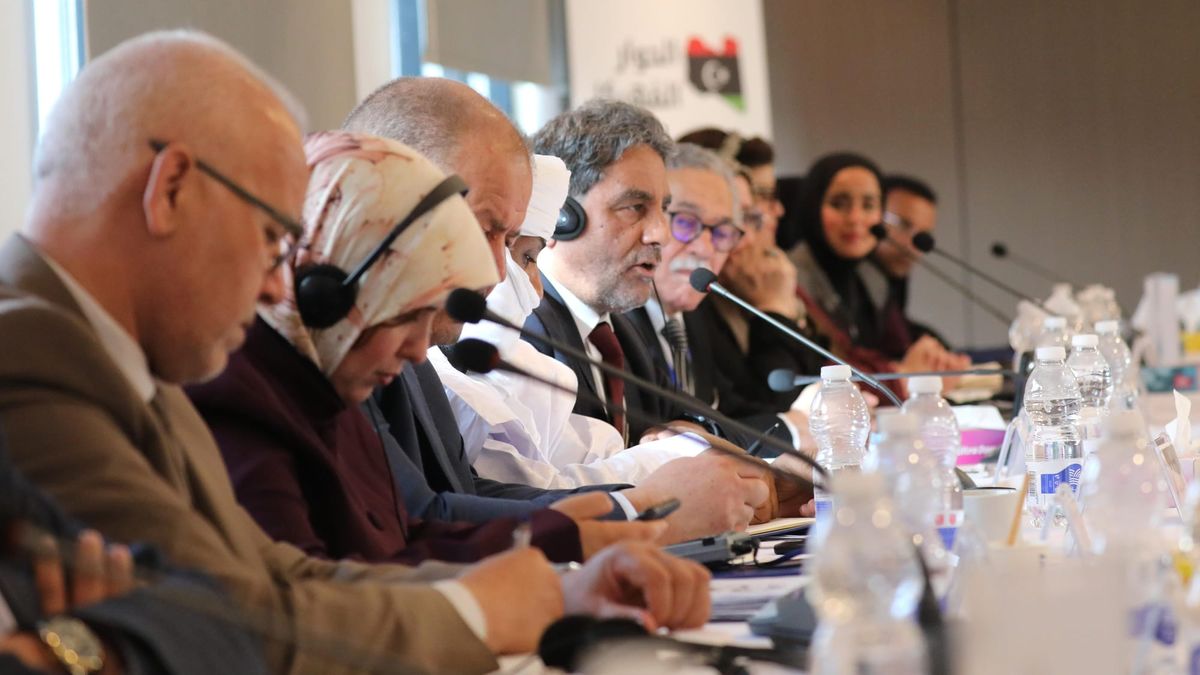
On the domestic front, the political landscape continued to be shaped by the reconciliation process between the parallel institutions in the east and west, guided by the UN-backed 'roadmap'. In this regard, Hanna Tetteh, the UN Special Representative and Head of UNSMIL, can point to certain advances in the initiative over the past six months. These include the agreements between the House of Representatives (Tobruk) and the High State Council (Tripoli) to renew the Electoral Commission (part of the first pillar), and the holding of meetings across the four tracks (Governance, Economy, Reconciliation and Security) of the Structured Dialogue (the third pillar of the plan), in which around 120 Libyans will participate. However, these steps forward have been accompanied by delays and resistance, which the senior UN official has publicly criticised. In response, the parties, particularly the eastern administration, have denounced interference in their sovereignty and rejected the involvement of third states, such as Qatar, which is alleged to have funded part of the process. In any case, Tetteh’s plan appears to have the backing of most of the actors involved, including the Security Council, the Berlin Group, Turkey, Egypt, the EU and the US, as well as the Libyan people themselves. The latter have once again expressed their intention to move forward on the path to democracy by participating in municipal elections in twenty-five municipalities. In this regard, while opinion polls show support for future elections if there is a prior institutional agreement, there have also been protests calling for the mass resignation of all eastern and western authorities.
Alongside the UN-led process, other initiatives have emerged, and it is unclear whether these are intended to promote or hinder reconciliation. From the east, Marshal Haftar has repeatedly called for a Libyan-led solution “beyond external agendas” and, in November, he appealed to southern tribes at a meeting to rise up peacefully and “decide their own destiny”. In the west, too, there is no desire to lose control of the process, and political structures continue to overlap. In November, for example, the 'Supreme Council of Presidencies' was established to coordinate the communications and strategies of the Presidential Council, the Government of National Unity, and the High Council of State. In January, Al-Menfi's Presidential Council adopted the 'National Reconciliation Charter' as a set of principles to be implemented by a new 'High Council for Peace and Reconciliation'. More recently still, Al-Menfi himself called for the resumption of the tripartite dialogue initiated in Cairo in March 2024 under the auspices of the Arab League. Furthermore, the 'Libyan National Gathering' was launched as a civic and tribal movement in February, with Prime Minister Dbeibah in attendance.
Contacts between the two leading families from the east and west of the country were reportedly resumed in January, and a new meeting between the Haftar and Dbeibah families was brokered by France and the US in Paris. It appears that there are plans to hold another meeting in Washington shortly, under the auspices of Trump’s envoy, Massad Boulos. Boulos is reported to have recently expressed his intention to promote a unified government, in which Abdelhamid Dbeibah would remain head of government and Saddam Haftar (son of the marshal) would become president of the Presidential Council.
Political instability continues to be accompanied by security disturbances. The Tripoli government continues to face clashes with and between militias, with several violent incidents in Tripoli itself, as well as in Misrata and Al Zawiya. In November, Interior Minister Al-Trabelsi unveiled his Comprehensive Security Strategy with the aim of tackling crime in the capital and surrounding areas by improving coordination between agencies and police forces. In the east, Marshal Haftar has been strengthening his Libyan National Army. He has established a joint border force with Chad, integrated the Salafist Subul Al Salam battalion into his regular ranks and strengthened his ties with Pakistan and Turkey.
Furthermore, the apparent assassination of one of former Libyan dictator Gaddafi’s sons, Saif Al-Islam, took place in territory under the control of the eastern administration in February. Despite having apparently retired, Saif Al-Islam had thousands of supporters and could have been a strong candidate in future presidential elections (he was already a candidate in the unheld 2021 elections). Haftar’s forces prevented his burial in Sirte, and he was eventually buried in Bani Walid, south of Tripoli and under GNA control. Although the Libyan public prosecutor’s office ordered the arrest of three suspects, no information has yet emerged regarding the motive or possible backing of those under investigation.
On the international stage, the US continues to seek a leading role in resolving the conflict, maintaining its efforts to promote a solution to the country’s political division. In October, the deputy head of Africom, and afterwards its commander, held successive meetings with both administrations and announced that the Flintlock exercises would be held with the armed forces of the east and west in an effort to reunify the armies. Russia and Turkey remain other key players, despite primarily backing opposing sides. They continue to diversify their strategy through gradual rapprochement with both administrations. Moscow reported that the Arctic Metagaz, one of its 'ghost fleet' gas tankers, had been supposedly attacked by Ukraine off the Libyan coast. The attack caused the tanker to partially sink, endangering navigation in the area due to the leakage of LNG.
Economically, the country experienced spectacular growth of almost 15% in 2025, primarily thanks to excellent crude oil production, which reached 501 million barrels. In addition, emphasis has been placed on infrastructure construction and renovation, such as the expansion of Sebha Airport and Misrata Free Port. The National Oil Corporation (NOC) has sought to attract more international companies by granting a new round of exploration tenders (the first since 2007). One of the concessionaires is the Spanish firm Repsol, which is working with Turkish companies in a consortium.
What's next.
In the coming months, we will witness a series of key developments that could determine whether the roadmap aimed at ending the Libyan conflict is successful. The truth is that the UN initiative does appear to be making positive progress, largely thanks to international support and the Libyan people’s desire for democracy and reunification. The US's role will be pivotal in determining this success, although it remains to be seen whether the White House is genuinely committed to supporting Tetteh’s reconciliation process or is merely seeking to end the conflict for economic reasons as part of Washington's transactional diplomacy in Africa. However, Massad Boulos’s plan to impose a single mixed government led by the Dbeibah and Haftar families faces significant internal and external opposition, which could hinder the fulfilment of the deadlines set by Tetteh. Furthermore, the process must address the allegations of illegal crude oil exports apparently revealed by a leaked report from the Security Council’s Panel of Experts in recent weeks. This UN body has just adopted Resolution 2819, drafted by the United Kingdom, in which, in addition to expressing concern over the “growing influence of armed groups” and the “high risk of terrorism” and extending the mandate of the Panel of Experts, it condemns the illicit export of oil as a “threat to the peace, security and stability of Libya” and urges the protection of the monopoly held by the NOC and the Libyan Foreign Bank over such operations.
Equally important for the future of the reunification process will be the steps taken in the economic and military spheres. The agreement recently reached between the House of Representatives and the High Council of State to draw up a unified budget is a very encouraging step forward. For the time being, it has been praised by all institutions, although it will be necessary to monitor its implementation against a backdrop of deep-seated economic interests among the various political actors. The reunification of both armies and the definitive establishment of security against militia violence are extremely complex yet essential objectives for a potential unified government. It remains to be seen whether the participation of personnel from both administrations in the US Flintlock exercises will constitute that long-awaited first step towards the integration of the armed forces.
Finally, we will need to evaluate the potential impact of the current crisis in the Persian Gulf on the country. From an economic perspective, Libya, as a gas and oil producer, could benefit in the short term from the Strait of Hormuz blockade due to rising global prices. However, if the conflict were to continue for too long, it could affect Libya's ability to meet domestic demand, as well as causing severe, widespread inflation that would impact social and political stability. Conversely, a poor deal potentially struck by the Trump administration with Iran could lead the president to attempt to secure a diplomatic victory outside the region. This could result in a hasty reunification agreement in Libya, in an attempt to restore his reputation as an international deal-maker and sell the idea of privileged access to Libyan hydrocarbons for US companies to his citizens.
- Fragmentation of power. Despite the promising agreements and rapprochement achieved under the Roadmap, deep divisions persist between the parallel administrations, and political reunification is still a long way off.
- Overlapping jurisdictions. The overlap between administrative structures and institutions can further complicate the political decision-making process.
- Violence. Despite the Tripoli government’s firm policy of eliminating militias and criminality, an underlying climate of confrontation persists which could lead to attacks and violent clashes at any moment. Foreign nationals are not necessarily direct targets, but they may still be affected by collateral damage.
- Active search for external partners. Among the opportunities, the country has shown a strong tendency to encourage foreign participation in hydrocarbon tenders and infrastructure construction projects.