#6months of Mauritania
NEWSLETTER. Economic diplomacy and the search for foreign investment, the threat of migration and the opening of a national dialogue.
What happened.
On the international stage, Mauritania has lost much of the exposure it enjoyed when it held the rotating presidency of the African Union until February. Nevertheless, the six-month period began in July with an important visit to the White House by President Ghazouani, alongside a small group of other African leaders from Senegal, Gabon, Liberia and Guinea-Bissau. President Ghazouani sought to take advantage of the new US transactional diplomacy (‘trade, not aid’) to promote the country's economic opportunities to President Trump, emphasising its strategic location, political stability, and natural resources. Unsurprisingly, it seems that the US administration invited this group of West African countries (excluding the major African powers) because of their potential in terms of infrastructure, energy and essential minerals. However, the supposed attraction of US investors and the invitation to Ghazouani contradict the decision to include Mauritania on the list of countries subject to severe travel restrictions to the US at the end of the year. This was due to the 'little presence' of the Mauritanian government in certain parts of its own territory.
In its northern neighbourhood, the country continues its policy of equidistance and neutrality towards the leaders of the Maghreb: Morocco and Algeria. Thus, while agreements with Rabat had multiplied in previous months, Ghazouani himself praised the trade routes with Algeria as a source of 'commercial vitality' for the region during the IATF in Algiers this semester.
Several clashes with the Polisario Front have also occurred during this period: in November, border skirmishes between Mauritanian gold prospectors and members of the guerrilla independence group prompted Ghazouani to receive a Sahrawi political and military delegation in the capital, in an attempt to reduce tensions. Nevertheless, Polisario forces continue to cross the border between the two territories frequently, prompting the intervention of the Mauritanian army.
However, the country faces its greatest problems in the southern neighbourhood, especially due to the severe instability in Mali, which has caused a massive influx of migrants for years. Unsurprisingly, Mauritania is home to around 300,000 Malian refugees, putting enormous strain on its resources, while it is under pressure from destination countries (the EU and Spain) to prevent departures and speed up deportations. This dire situation prompted Human Rights Watch to issue a critical report at the beginning of the semester, accusing the authorities of serious abuses and human rights violations, including torture. However, the report also acknowledged the positive direction of the reforms progressively adopted by the authorities.
The extensive border between the two countries poses serious security problems, including accusations of arms trafficking from Ukraine to Mali, as well as the constant threat of jihadism and Russian paramilitaries. Despite the difficulties experienced by Mauritanian migrants in Mali, such as the sudden closure of their businesses, Nouakchott has consistently sought to improve relations with Goïta's government in this challenging context. Ghazouani and his ministers have called for consideration to be given to the challenging situation of their neighbour, which has worsened since September due to the terrorist group JNIM's blockade of fuel supplies to Bamako.
The migration issue has also cast a slight shadow over bilateral relations with Senegal, particularly due to the pressure exerted by the police on its nationals, leading them to stage a 48-hour strike. Nevertheless, the success of the jointly operated Grand Tortue Ahmeyim gas field, which has exported 18.5 shipments of LNG since its inaugural shipment in April, generating $32 million for the state in the process, is a positive indication of the harmony and collaboration between the two countries.
In macro-regional terms, Mauritania aligns itself with most Arab states, particularly regarding the Palestinian issue. For example, it has expressly denied reports of a meeting with Netanyahu in Washington, joined condemnations of the Israeli attack in Doha, and expressed firm support and 'absolute solidarity' with Qatar.
Additionally, the country is seeking to present itself as an attractive destination for foreign investment and development aid, following the interruption of USAID funds. Consequently, this semester has seen the signing of numerous agreements with public and private partners from third countries, including Japan (desalination plants), Saudi Arabia (through the Saudi Fund for Development), the UAE (a hybrid power plant) and France (mines), as well as with international financial institutions such as the AfDB (chaired by a Mauritanian), the EIB (railway modernisation) and the IMF.
Domestically, the national dialogue process continues to dominate the political agenda. In October, the coordinator of the process submitted his report to President Ghazouani after concluding the preliminary phase of contacts with various political parties and other representatives of civil society. While most are inclined to participate in the dialogue, the opposition parties view the process with some suspicion due to its lack of fixed deadlines and ambiguity regarding the issues that can be debated. The persistence of slavery and humanitarian liabilities are among the most demanded issues, but there is uncertainty about the subsequent implementation of the political agreements reached. These factors could cause the process to fail, as has happened with the five similar processes carried out since independence.
The opening of this second phase coincided with the scandal caused by the publication of the Court of Auditors' annual report, which revealed serious management deficiencies and cases of corruption in various public bodies and companies, including the promising hydrocarbons sector. The government reacted swiftly to the strong criticism by dismissing and prosecuting up to thirty senior officials, and by adopting new measures to control the management of state resources and public spending. However, the opposition considered these measures insufficient.
In the judicial sphere, it was also noteworthy that the Supreme Court confirmed Mohamed Ould Abdel Aziz's fifteen-year prison sentence for illicit enrichment and influence peddling during his term in office. This extended the initial sentence and closed the case against the immediate predecessor of the current president.
In economic terms, the country continues to show positive prospects, despite the slowdown identified by the World Bank at the beginning of the semester. The financial institution recommends taking measures to diversify the economy and reduce dependence on extractive mining, which is expected to contract in 2025, causing growth to decline to around 4%, following the excellent 6.3% growth experienced in 2024. The World Bank forecasts however that this rate will recover to an average of around 5% between 2025 and 2027, but this will require significant investment in sectors with strong potential, such as agriculture, services, and digital technology, according to the organisation. The IMF also praised the implementation of joint programmes and the healthy pace of the Mauritanian economy, but recommended moving from a system of widespread subsidies to more personalised transfers to keep inflation at around 2%.
What's next.
The migration problem will certainly feature prominently among the issues that will shape the political landscape in 2026. According to UNHCR forecasts, the number of Malian refugees will increase significantly this year, reaching around 380,000. This will require long-term solutions to be implemented to provide protection and assistance along the routes to Nouakchott and Nouadhibou. A substantial investment package will also be needed to support the reception of refugees in the desert border region of Hodh Chargui, where the Mbera refugee camp, which receives the largest number of arrivals, is located. However, all of this depends on the situation in Bamako and whether the Malian government can eliminate the threat from JNIM.
Internal stability could also be called into question if the national dialogue process begins to falter, certain opposition groups or civil society representatives are marginalised, or their expectations are not met. Despite his professed neutrality, President Ghazouani must ensure the widest possible participation if he is to fulfil his election promise of achieving a consensus that will result in social cohesion, internal stability and sustained prosperity.
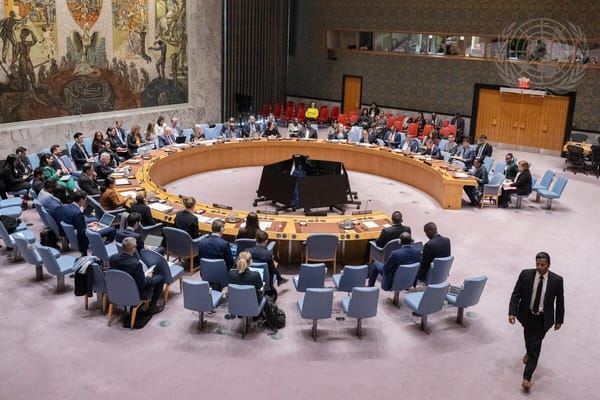
The news this semester will also be affected by the negotiation process on Western Sahara, which has acquired momentum following the adoption of UN Security Council Resolution 2797 last October. Although the country has long maintained an ‘active neutral’ position on the conflict and kept a low profile among the other parties involved, it is likely that they will seek to influence its position in view of its eventual participation in the dialogue tables that Personal Envoy De Mistura intends to convene as soon as possible.
Finally, in economic terms, Mauritania will certainly continue its efforts to promote investment and attract capital, but it must manage its natural resources wisely to avoid becoming embroiled in the geopolitical competition affecting those who possess strategic minerals.
- Spanish-Mauritanian relations will continue to be strongly affected by the migration crisis for another six months. Cooperation between the two governments, along with Spain's significant contribution, appears to be the reason for the decrease in the number of Mauritanian migrants intercepted en route to the Canary Islands, which fell to 3,500 people by October 2025, compared to more than 10,000 in 2024.
- The first High-Level Meeting between the two countries took place in July. During Pedro Sánchez's visit to Nouakchott with several of his ministers, several agreements were signed relating to transport, national parks, cybersecurity and fishing. Spain is also strongly committed to providing development aid to Mauritania, as set out in the Country Partnership Framework for the period 2024–2027, which provides for aid totalling around €60 million.
- The close relationship between the two countries has also resulted in the inaugural business meeting and the recent establishment of the Mauritania-Spain Business Council, which was initiated by the Chambers of Commerce of Madrid, Tenerife and Gran Canaria and was attended by businesses from both countries. This initiative aims to formalise business dialogue, investment and trade.
- Spain is thus well positioned to strengthen its role as Mauritania's partner in developing its economy and essential infrastructure in 2026, leveraging the positive bilateral relations to participate in sectors where our companies have extensive experience, such as hydrocarbons, renewable energies, logistics, infrastructure, tourism, and the blue economy.